Why is my bank statement PDF locked with a password?
By Recofolio · Updated 20 Oct 2026 · 3 min readBanks lock statement PDFs so a statement sent by email cannot be read by the wrong person. The password is usually built from your own details, such as part of your name and your date of birth; the email says which. Write the pattern down for each account, and keep the file as the bank sent it.
Why banks lock the file
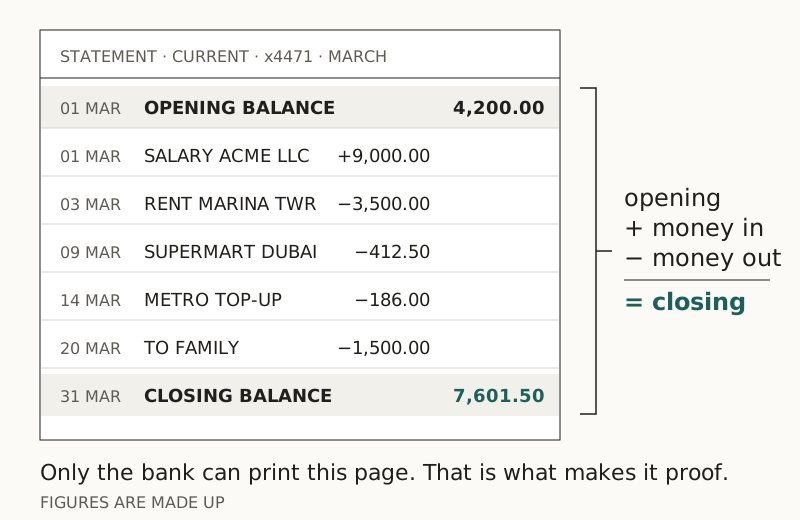
Most banks send statements as PDF files locked with a password. The statement lists every payment you made, who you paid and what you held, and email is not a private way to send that. The lock means a statement that reaches the wrong inbox, or is forwarded by mistake, cannot be read without the password.
Where the password comes from
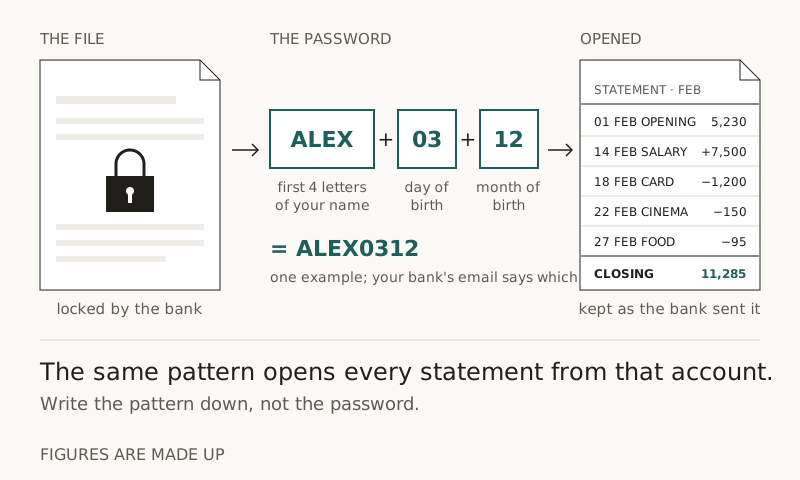
The password is not usually one you chose. Banks build it from things they know about you and you can recall without writing down: often part of your name, your date of birth, or some digits of your card, account or customer number, in a set order. The email that carries the statement normally says which. If it doesn't, the bank's website or its help line will. The pattern stays the same from month to month, so once you know it, every statement from that account opens the same way.
The trouble starts later
The trouble starts later. Years on, you have a folder of statements from several banks, and some from an account you closed or a country you left. Each has its own pattern, and the one for the old account has gone from memory. The file is still yours; it simply cannot be opened by you.
Two habits that help
Two habits prevent this. Write each account's pattern down, not the password itself, somewhere you keep other important things: “name, first four letters, then day and month of birth” is enough to rebuild it. And keep the file exactly as the bank sent it. Removing the lock by printing it to a new PDF gives you a copy, not the bank's original, and a lender or an embassy may want the original.
What Recofolio does
Recofolio opens a locked statement on your own device, with the password you give it, and the file stays on your device. The original file is kept as the bank sent it, lock and all.